The customer problem
The customer problem
When an API changes, product teams often need new instructions, updated code packages, and a clear review of what could break before partners or developers are surprised.
Apyrn Forge early access
Apyrn Forge starts with an API description, a structured explanation of how software systems exchange information. It turns that description into ready-to-use code packages, AI tool connections, and documentation, then pauses risky releases for review.
Example: a payments service changes what information partners must send. Forge shows what changed, prepares updated developer materials, and holds the risky release for review.
Apyrn Forge remains an early-access product with public general availability and external publishing still gated.
Forge product access and operating context are planned to appear through Apyrn One in stages; current integration depth must not be assumed.
Guided explanation
The customer problem
When an API changes, product teams often need new instructions, updated code packages, and a clear review of what could break before partners or developers are surprised.
The better operating model
Forge starts with an API description, then prepares ready-to-use code packages, AI tool connections, and documentation from that shared source.
The solution approach
Upload or connect an API description, review what changed, let Forge prepare the outputs, check them, and hold risky releases for a person to approve.
Conceptual architecture
Accepts OpenAPI descriptions in JSON or YAML, including upload, hosted URL, and GitHub webhook ingestion paths.
Generates TypeScript, Python, Java, documentation, and MCP server artifacts from the reviewed API description.
Classifies changes and holds breaking versions for authenticated approval before release.
Enterprise examples
A partner-facing payments API changes required information and needs review before updated developer packages are released.
A developer-experience team supports TypeScript, Python, and Java and wants those packages to stay aligned.
An AI product owner wants approved API operations prepared as controlled AI tool connections.
What this enables
Reduce repeated manual work when API descriptions change.
Help product and developer-experience teams see risky changes before release.
Keep generated packages, AI tools, documentation, checks, and release history together.
Scope and qualification
Early access; live external registry publishing, production billing, and public general availability remain gated.
Forge prepares artifacts from API descriptions; it does not replace the API or the source system.
Recognize the problem
An API is a defined way for software systems to exchange information or request an action. When it changes, every team using it may need updated instructions, code, and review.
A change that looks small to the API owner can still break partner software if the required information changes.
TypeScript, Python, and Java packages can become inconsistent when each one is updated by hand.
Teams may want an AI assistant to use approved API operations, but they need a controlled connection rather than broad system access.
How it helps
Forge reads the API description and shows whether the change looks safe or needs review.
Forge prepares ready-to-use code packages, AI tool connections, and documentation from the same source.
Forge runs checks and holds risky versions until an authorized person approves the next step.
Illustrative use cases
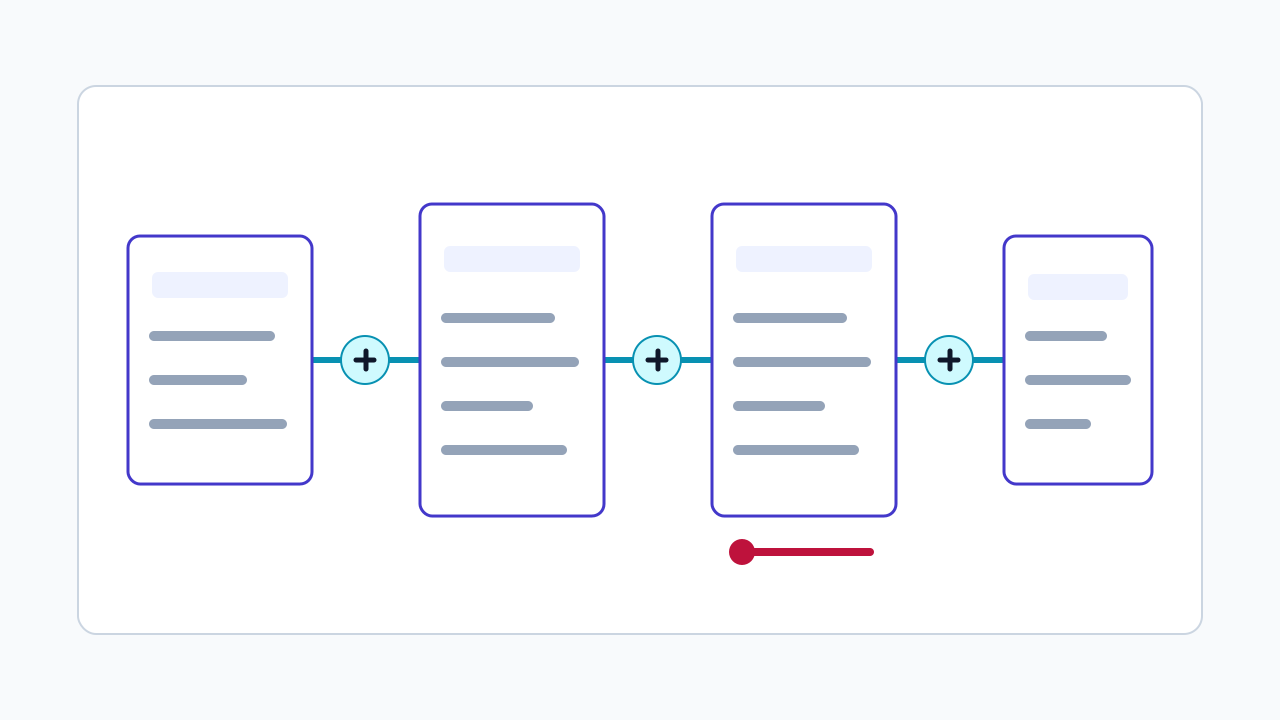
A product manager responsible for partner integrations needs to know whether a change could break partner software. Forge identifies the risky change, prepares updated packages and documentation, and holds the release for review.
Page visual: before-and-after API description, review-required state, and updated partner instructions.A developer-experience lead wants TypeScript, Python, and Java packages to stay consistent. Forge prepares the supported packages from the same API description and checks each generated result.
Page visual: one source on the left and consistent developer packages on the right.An AI product owner needs a controlled way for an assistant to discover and use approved API operations. Forge prepares an MCP server, described publicly as an AI tool connection, from the reviewed API description.
Page visual: approved operations becoming clearly named AI tools without implying unrestricted access.What teams can do
Prepare TypeScript, Python, and Java packages from OpenAPI descriptions.
Turn reviewed API operations into controlled MCP server artifacts for AI assistant use.
Classify API changes, create a human-readable changelog, and pause breaking versions for approval.
Render generated documentation, install guidance, changelogs, and release evidence from the same workflow.
What Forge does not replace
The API owner still controls the source system, production release decision, registry credentials, and external availability. Forge is an early-access product, and live public registry publishing remains gated.
For technical teams
Forge accepts OpenAPI 3.x JSON or YAML through upload, hosted URL polling, and GitHub webhook ingestion paths.
Forge generates TypeScript, Python, Java, documentation, and MCP server artifacts with stdio and streamable HTTP transport paths.
Forge supports structural API diffing, semantic version decisions, smoke testing, breaking-change holds, authenticated approval, and signed lifecycle webhook events.
FAQ
Forge needs an API description, usually an OpenAPI file or hosted URL, plus the product decisions that govern whether generated outputs may be released.
An SDK is a ready-to-use code package that helps a developer work with an API.
Forge can mark the release as review required, prepare the updated outputs, and wait for an authorized approval before release.
Public registry publishing is not a live general-availability claim today. The current page should present Forge as early access and describe publishing paths as gated.
Join early access to review whether Forge fits your API change, developer package, documentation, or AI tool connection workflow.